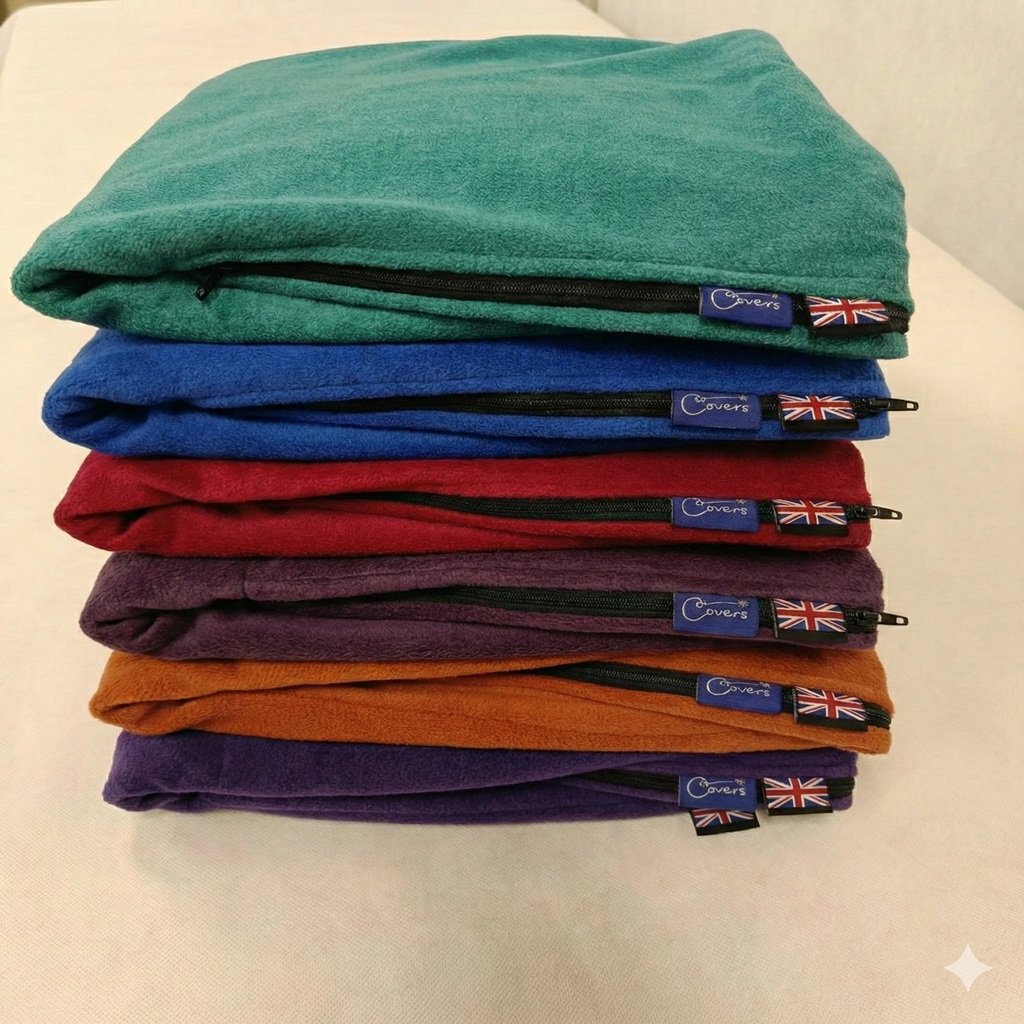
.png)
Sagging sofa cushions are almost never a reason to replace your sofa. In most cases, the frame is fine — it's the foam or fibre fill inside the cushion that's failed. Replacing the internal fill with high-density foam typically costs between £30 and £120 per cushion, compared to £800–£3,000+ for a new sofa. The fix takes hours, not weeks.
Why Sofa Cushions Sag in the First Place
All cushion fills degrade over time — but how quickly, and why, depends entirely on what's inside.
.png)
The Two Most Common Fill Types (And Why One Fails Much Faster)
Fibre fill (also called hollow fibre or polyester fibre) is the fluffy, cloud-like stuffing used in most mid-range sofas from high street retailers. It feels soft initially, but the individual fibres compress, clump, and lose their loft permanently. There's no recovery. Once it's flat, it's flat.
Foam degrades differently. Low-density foam breaks down from the inside — it oxidises and crumbles, which is why you sometimes see that orange, dusty residue when you open an old cushion. High-density foam (typically35–50 kg/m³) resists this process significantly longer, holding its shape under repeated compression and recovery.
The key number most people don't know: density, not firmness, is what determines how long foam lasts. A soft foam can still be high-density. A firm foam can be low-density and still fail in two years. When retailers say "high quality foam," they rarely specify the density — and that vagueness is worth questioning.
Density (kg/m³) measures the mass of foam per cubic metre and correlates directly with durability, not softness. Firmness is measured separately using ILD ratings.
How to Tell What's Inside Your Cushion
Before fixing anything, it helps to know what you're working with.
- Unzip the cushion cover (most have a hidden zip along the back or base seam)
- If the fill is loose, white, and fluffy — it's fibre
- If it's a solid block, even a wrapped one — it's foam
- If the foam crumbles or has a brown/orange tinge — it's oxidised and needs replacing
- If the foam feels intact but has permanently compressed in the centre — it's low-density and past its usable life
What Density Do High Street Sofas Actually Use?
Most high street sofas in the £700–£1,500 range use foam in the 25–30 kg/m³ range as standard. That density keeps manufacturing costs down, but it also means visible compression within three to five years of daily use.
Retailers rarely publish density figures. They use terms like "medium support" or "premium comfort" instead. Without the kg/m³ rating, you cannot predict lifespan.
When we cut replacement seat cushions, we start at 35 kg/m³ as a minimum for daily-use sofas. That density difference alone is why a refill often outlasts the original factory cushions.
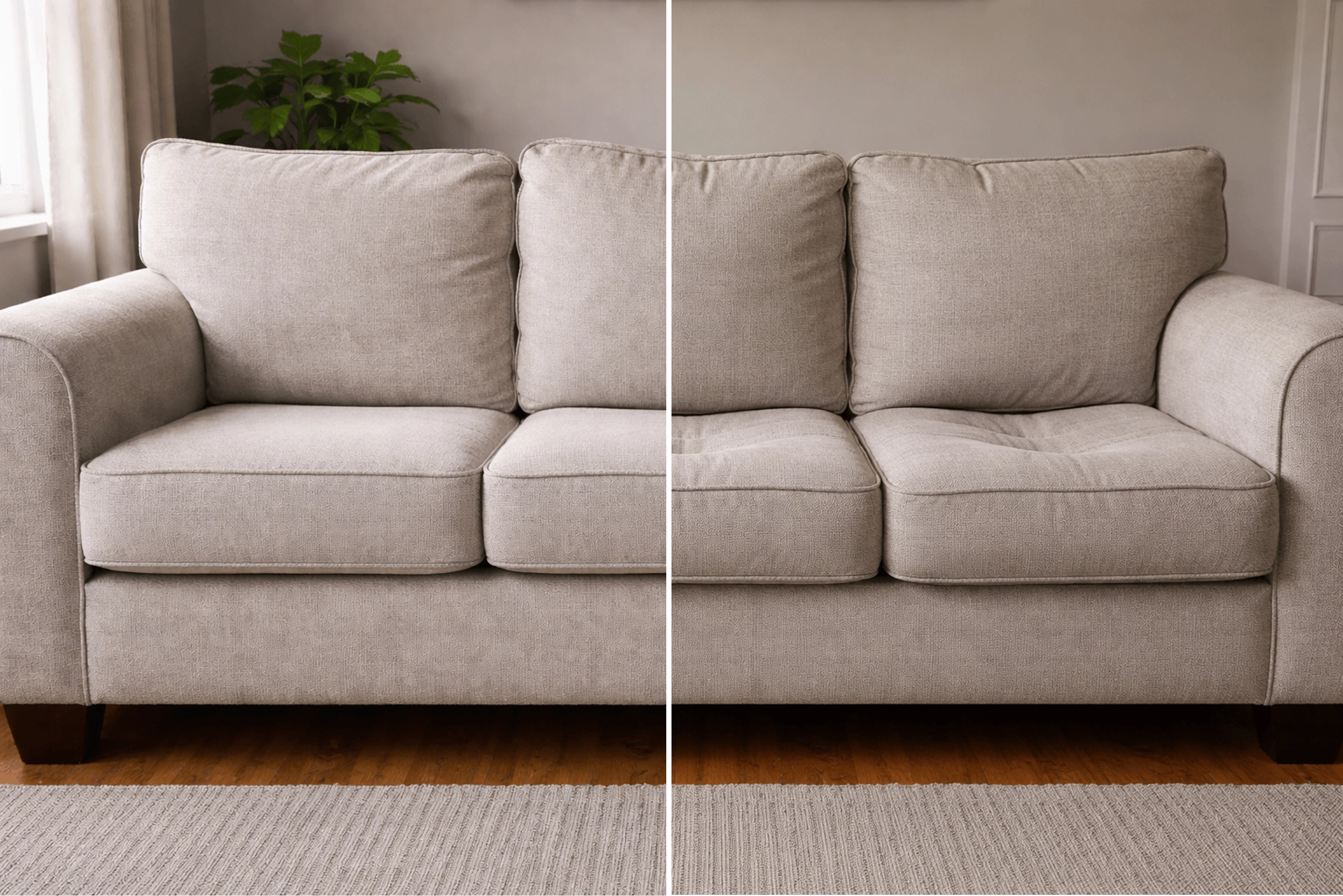
Real-World Example: A Three-Seater Sofa Saved for £195
FAQ: What People Actually Ask About Sagging Sofa Cushions
Can you replace sofa cushion foam without replacing the whole cushion?
Yes, in most cases. If your cushion cover has a zip — or even a sewn seam that can be carefully opened and restitched — the existing fill can be removed and replaced with new foam cut precisely to size. You keep your covers, your sofa's look stays the same, and the fix is done within hours.
How much does it cost to refill sofa cushions in the UK?
Refilling a single seat cushion with high-density foam typically costs between £30 and £80 depending on size and foam grade. A full three-seater with back and seat cushions usually runs £150–£350 — well under 20% of the cost of a comparable new sofa.
Is high-density foam worth it compared to cheaper alternatives?
For seat cushions that take daily compression, yes — emphatically. High-density foam (35 kg/m³ and above)maintains its profile for a decade or more under normal use. Lower-density options save money upfront but tend to show wear within two to four years.

What is the Same-day Refill service and how does it work?
Bring your unzipped cushion covers to our unit, and we'll cut and fit new foam to match the same day. Most customers drop off in the morning and collect by early afternoon. No waiting weeks for delivery, no guessing on measurements.
Common Mistakes When Trying to Fix Sagging Cushions
- Topping up fibre fill instead of replacing it. Adding more fibre to a compressed cushion feels like a fix for about two weeks. The old, compacted fill underneath acts as a hard base and the new fibre collapses just as quickly into it.
- Buying the wrong foam density online. Many online retailers list firmness ratings without publishing density. A "firm" foam at 25 kg/m³ will still fail early. Always ask for the density in kg/m³.
- Cutting foam too small "to make it easier to fit." Foam needs to be cut slightly larger than the cover interior— typically 10–15mm over on each dimension — so it fills the cover under compression without leaving gaps at the edges
- Ignoring the back cushions. Most people focus on seats, but collapsed back cushions affect posture and the overall look of the sofa. Replacing both at the same time gives a uniform result.
Cost Breakdown: Repair vs. Replace
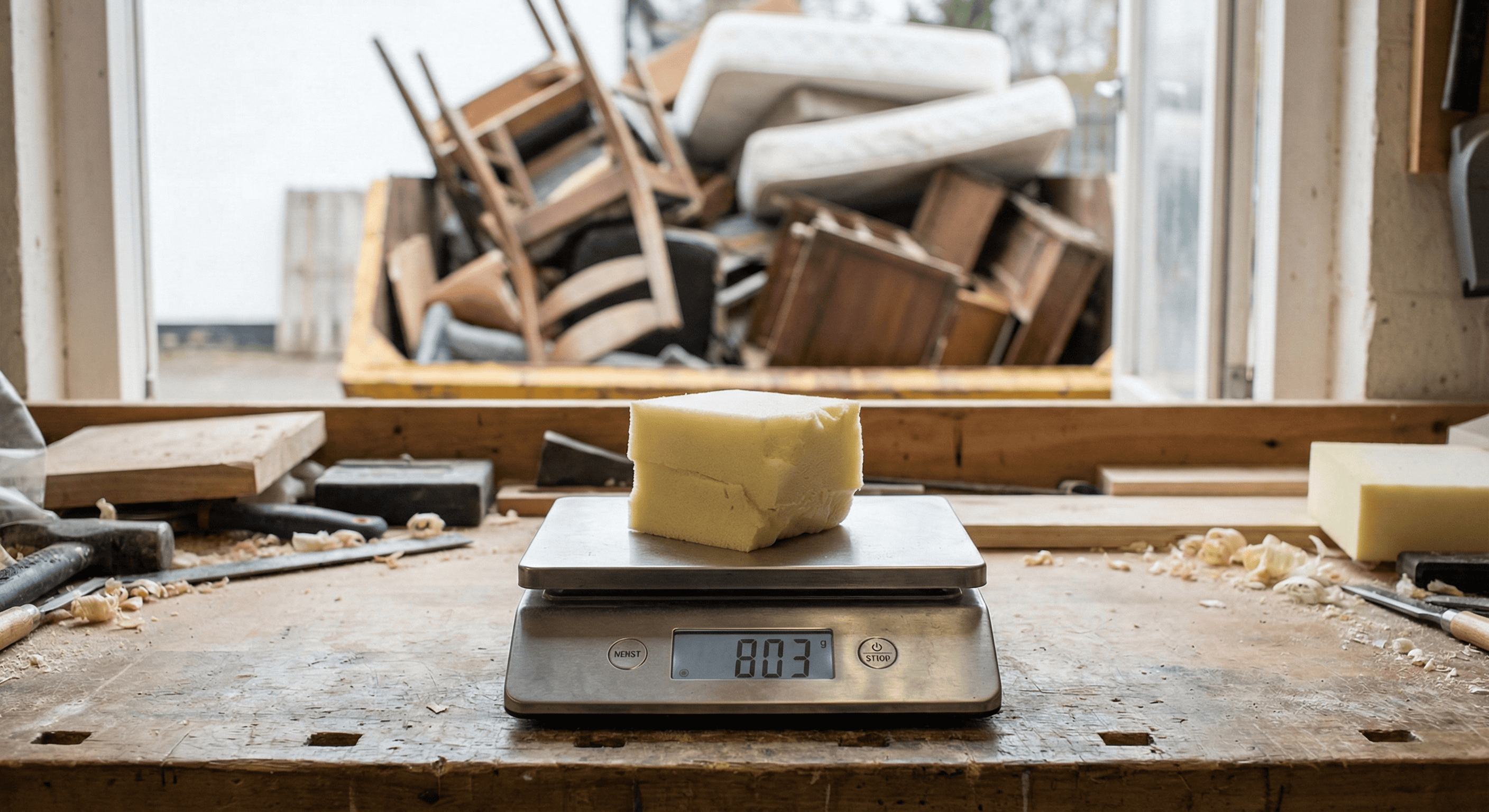
The Environmental Case for Refilling
The average UK sofa weighs 45–90 kg and takes decades to break down in landfill. Most sofas discarded due to "wear" still have structurally sound frames — it's the cushion fill that's failed.
Replacing fill rather than the sofa eliminates the need to manufacture, ship, and eventually dispose of an entire piece of furniture. The foam we replace weighs a fraction of a full sofa and represents a fraction of the environmental load.
For most households, the environmental impact decision is simple: replacing three seat cushions means swapping roughly 6–12 kg of foam. Replacing the entire sofa means manufacturing, transporting, and disposing of 45–90 kg of mixed materials. From a material standpoint alone, refilling is the lighter-footprint option.
What To Do This Week
- Unzip one cushion cover and inspect the fill — identify whether it's fibre or foam, and check for signs of oxidisation or permanent compression.
- Measure your cushion interior — length, width, and height with the cover empty and laid flat.
- Contact us with your measurements — we can advise on the right foam grade for your usage and give you an accurate price before you commit.
- Book a Same-day Refill appointment if you'd prefer to bring the covers in — most jobs are turned around within a few hours.
- Don't buy a new sofa until you've confirmed the frame is actually the problem — in the vast majority of cases, it isn't.
Get An Instant Online Quote for Your Replacement Sofa Cushions
It's really easy to get an instant quote for sofa cushions with Foam & Covers. Click this link for an instant online quote by simply providing a few key details so we know precisely what you need from your replacement sofa cushions. Or find out more about your options by visiting our sofa cushion covers page to learn more about custom cushions, foam and fabrics.